Revelation14:13 – And I heard a voice from heaven saying unto me, Write, Blessed are the dead which die in the Lord from henceforth: Yea, saith the Spirit, that they may rest from their labours; and their works do follow them.
Blessed are they who die in the Lord (Douce Apocalypse – Bodleian Ms180 — image via Wikimedia Commons)
Psalm31: 2,3,1 [Latin] – Be my protector and place of refuge, to keep me safe; for you are my strength and refuge; and for the sake of your name, you will lead and nourish me.
In you O Lord, I have put my trust; do not let me be put to shame; In your justice rescue me.
Esto mihi in Deum protectorem, et in locum refugii, ut salvum me facias: quoniam firmamentum meum, et refugium meum es tu: et propter nomen tuum dux mihi eris, et enutries me.
V. In te, Domine, speravi, non confundar in aeternum: in justitia tua libera me, et eripe me.
Figure from The History, Theory, and Practice of Illuminating, by M. Digby Wyatt (1861), quoting Psalm 31:1
***
Esto Mihi, sacred motet from Choralis Constantinus, Volume 1 (1550), composed by Heinrich Isaac (c. 1450-1517)
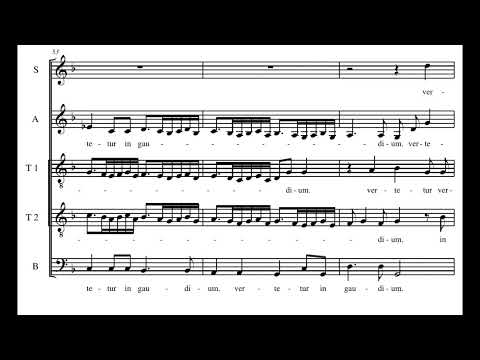
John16: 20-21a [Latin] – Amen, amen, I say to you, that you shall lament and weep, but the world shall rejoice: and you shall be made sorrowful, but your sorrow shall be turned into joy. A woman, when she is in labour, hath sorrow, because her hour is come; but when she hath brought forth the child, she remembereth no more the anguish, for joy.
Amen amen dico vobis quia plorabitis et flebitis vos mundus autem gaudebit vos autem contristabimini sed tristitia vestra vertetur in gaudium mulier cum parit tristitiam habet quia venit hora eius cum autem peperit puerum iam non meminit pressurae propter gaudium.
Mother’s hands frame baby’s feet (Image via Wikimedia Commons)
2 Corinthians 10: 17-18 [Latin] –17 [Brothers!] … he that glorieth, let him glory in the Lord. 18 For not he that commendeth himself is approved, but whom the Lord commendeth.
Fratres! Qui gloriatur, in Domino glorietur, non enim qui seipsum commendat ille probatus est, sed quem Deus commendat.
Orlande de Lassus (1535-1594), composer – Image via Wikipedia
Revelation7:9-12 [Latin] – 9 [After this] I saw a great multitude, which no man could number, of all nations, and tribes, and peoples, and tongues, standing before the throne, and in sight of the Lamb, clothed with white robes, and palms in their hands: 10 And they cried with a loud voice, saying: Salvation to our God, who sitteth upon the throne, and to the Lamb. 11 And all the angels stood round about the throne, and the ancients, and the four living creatures; and they fell down before the throne upon their faces, and adored God, 12 Saying: Amen. Benediction, and glory, and wisdom, and thanksgiving, honour, and power, and strength to our God for ever and ever. Amen.
Vidi turbam magnam quam dinumerare nemo poterat, ex omnibus gentibus et tribubus, et populis, et linguis: stantes ante thronum Dei in conspectu Agni, amicti stolis albis, et palmae in manibus eorum: et clamabant voce magna dicentes: Salus Deo nostro qui sedet super thronum Agno. Et omnes angeli stabant in circuitut throni et seniorum et quattuor animalium, et ceciderunt in conspectu throni et adoraverunt Deum, dicentes: Amen. Benedictio, et claritas et sapientia et gratiarum actio, honor virtus et fortitudo Deo nostro, in saecula saeculorum, Amen
Women with palm branches before The Lamb. Detail from the Ghent Altarpiece / Adoration of the Lamb (1432), by Jan van Eyck
Psalm89: 20-21 [Latin] – I have found David, my servant; I have anointed him with my holy oil; For my hand shall aid him and my arm shall strengthen him. Alleluia.
Inveni David servum meum, oleo sancto meo unxi eum. Manus enim mea auxiliabitur ei et brachium meum confortabit eum. Alleluja.
Illuminated initial showing Samuel anointing David with Jesse nearby; from the “Bedford Psalter and Hours”. Held and digitised by the British Library. Image via Wikimedia Commons.
Jeremiah 13:17-18 [Latin] – Weeping [my soul] shall weep, and mine eye shall drop tears, because the flock of our Lord is taken. Say to the king, and to her that ruleth: Be humbled, sit down: because the crown of your glory is come down from your head.
Plorans plorabit, et deducet oculus meus lachrimas meas, quia captus est grex Domini. Dic regi et dominatrici, humiliamini, sedete, quoniam descendit de capite vestro corona gloriae vestrae.
Psalm27: 7,9 [Latin] – Hear, O Lord, my voice with which I have cried to Thee: be Thou my helper, forsake me not, do not Thou despise me, O God, my Savior
Exáudi, Dómine, vocem meam, qua clamávi ad te: adjútor meus esto, ne derelínquas me neque despícias me, Deus salutáris meus.
Les Très Riches Heures du duc de Berry, Folio 92v – Psalm XXVI the Musée Condé, Chantilly. Psalm XXVI = 26 Vulgata = Psalm 27 (most modern translations) – Image via Wikimedia Commons
Exáudi, Dómine, vocem meam: Introit text for the Fifth Sunday after Pentecost, musical setting by Giovanni Paolo Cima (c. 1570-1610), first published in Concerti ecclesiastici, no. 10 (1610).