Acts12: 11; Psalm139: 1-2a) [Latin] – 11 And when Peter was come to himself, he said, Now I know of a surety, that the Lord hath sent his angel, and hath delivered me out of the hand of Herod, and from all the expectation of the people of the Jews.
1 O lord, thou hast searched me, and known me. 2 Thou knowest my downsitting and mine uprising, thou understandest my thought afar off.
Original Latin:
Nunc scio vere, quia misit Dominus angelum suum : et eripuit me de manu Herodis, et de omni exspectatione plebis Iudaeorum.
Domine, probasti me, et cognovisti me : tu cognovisti sessionem meam, et resurrectionem meam.
Gloria Patri…
The Liberation of St. Peter by Antonio de Bellis (c. 1616 – c. 1656)
***
“Nunc scio vere,” 6-voice sacred motet composed by William Byrd (1539/1540-1623) for Solemnity of Saints Peter and Paul, Apostles (June 29). First published in Gradualia II, no. 38 1607.
Byrd: Nunc scio vere a 6, T. 156
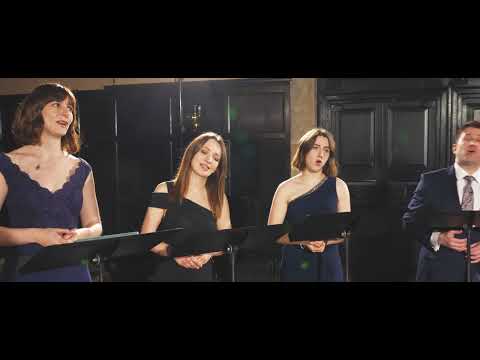
Sung by The Cardinall’s Musick, directed by Andrew Carwood
Acts1: 11; Psalm47: 1 [Latin] – 11 Which also said, Ye men of Galilee, why stand ye gazing up into heaven? this same [Jesus] which is taken up from you into heaven, shall so come in like manner as ye have seen him go into heaven.
1 O clap your hands, all ye people; shout unto God with the voice of triumph.
Original Latin:
Viri Galilaei, quid admiramini aspicientes in caelum? Alleluia. Quemadmodum vidistis eum ascendentem in caelum, ita veniet, Alleluia.
Omnes gentes plaudite manibus: jubilate Deo in voce exultationis.
Gloria Patri, et Filio, et Spiritui Sancto, sicut erat in principio, et nunc et semper, et in saecula saeculorum.
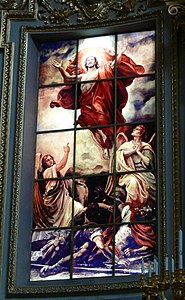
The Ascension [of Jesus], by Benvenuto Tisi da Garofalo (1481–1559)
Genesis3: 19b [Latin] – [Remember O Man] In the sweat of thy face shalt thou eat bread, till thou return unto the ground; for out of it wast thou taken:for dust thou art, and unto dust shalt thou return.
Original Latin:
Memento homo, quod cinis es, et in cinerem reverteris.
Ashes imposed on the forehead of a Christian on Ash Wednesday
Psalm95:1-2 [Latin] – O come, let us sing unto the Lord: let us make a joyful noise to the rock of our salvation. Let us come before his presence with thanksgiving, and make a joyful noise unto him with psalms.
Original Latin: Venite, exsultemus Domino; jubilemus Deo salutari nostro; praeoccupemus faciem ejus in confessione, et in psalmis jubilemus ei:
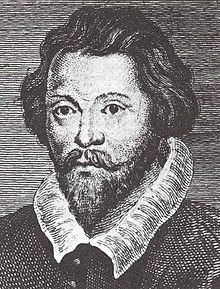
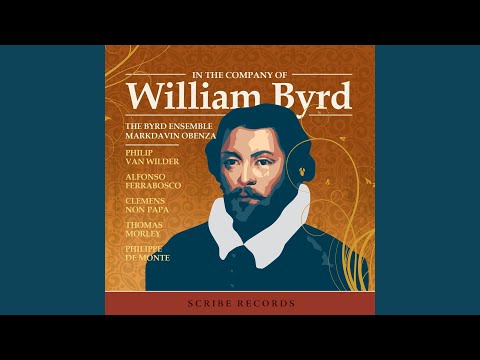
Detail of an 18th-century posthumous engraving of William Byrd by Gerard Vandergucht, after Niccolò Haym.
Psalm117: 1-2 – Praise our Lord all ye Gentiles, praise him all ye people, Because his mercy is confirmed upon us, and his truth remaineth for ever. Amen.
“Praise our Lord all ye Gentiles,” sacred anthem composed by William Byrd (1539/1540-1623), and first published in Psalmes, Songs, and Sonnets, no. 29 (1611)
Jeremiah 13:17-18 [Latin] – Weeping [my soul] shall weep, and mine eye shall drop tears, because the flock of our Lord is taken. Say to the king, and to her that ruleth: Be humbled, sit down: because the crown of your glory is come down from your head.
Plorans plorabit, et deducet oculus meus lachrimas meas, quia captus est grex Domini. Dic regi et dominatrici, humiliamini, sedete, quoniam descendit de capite vestro corona gloriae vestrae.
Psalm81:1-4 – Sing joyfully to God our strength; sing loud unto the God of Jacob! Take the song, bring forth the timbrel, the pleasant harp, and the viol. Blow the trumpet in the new moon, even in the time appointed, and at our feast day. For this is a statute for Israel, and a law of the God of Jacob.
1 Justorum autem animae in manu Dei sunt, et non tanget illos tormentum mortis.
2 Visi sunt oculis insipientium mori, et aestimata est afflictio exitus illorum,
3 et quod a nobis est iter exterminium; illi autem sunt in pace:
– 1 The souls of the righteous are in the hand of God, and no torment shall touch them. 2 They seemed, in the view of the foolish, to be dead; and their passing away was thought an affliction 3 and their going forth from us, utter destruction. But they are in peace.

![The Ascension [of Jesus], by Benvenuto Tisi da Garofalo (1481–1559)](https://commons.wikimedia.org/wiki/File:Benvenuto_Tisi_da_Garofalo_-_Ascension_of_Christ_-_WGA08474.jpg)