Psalm91: 4[Latin] – The Lord will overshadow thee with His shoulders, and under His wings thou shalt trust: His truth shall compass thee with a shield.
Original Latin:
Scapulis suis obumbrabit tibi Dominus et sub pennis ejus sperabis, scuto circumdabit te veritas ejus.
English: Allegoric painting by Mogens Christian Thrane in Sortebrødre Church, Viborg, Denmark. Text: He will cover you with his pinions and under his wings you will find refuge. (Psalm 91,4)
Genesis3: 19b [Latin] – [Remember O Man] In the sweat of thy face shalt thou eat bread, till thou return unto the ground; for out of it wast thou taken:for dust thou art, and unto dust shalt thou return.
Original Latin:
Memento homo, quod cinis es, et in cinerem reverteris.
Ashes imposed on the forehead of a Christian on Ash Wednesday
Psalm31: 16-17a [Latin] – Make thy face to shine upon thy servant, and save me in thy mercy; O Lord, let me not be confounded, for I have called upon thee.
Original Latin:
Illumina faciem tuam super servum tuum, et salvum me fac in misericordia tua: Domine, non confundar, quoniam invocavi te.
Portrait of Carlo Gesualdo
***
“Illumina faciem tuam,” a 5-voice sacred motet composed by Carlo Gesualdo (1566-1613), first published in Sacrae cantiones I, no. 18 (1603)
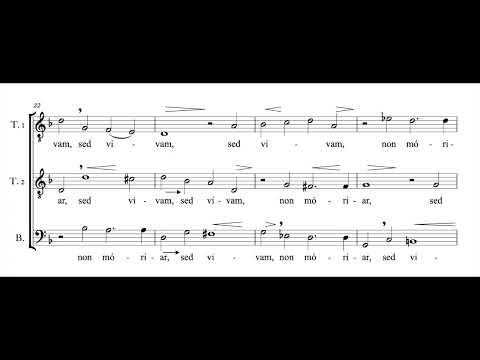
Psalm 31 Carlo Gesualdo (1566-1613): Illumina faciem tuam für fünfstimmig gemischten Chor a cappella
Psalm143: 1-2 [German] – Hear my prayer, O Lord, give ear to my supplications: in thy faithfulness answer me, and in thy righteousness. And enter not into judgment with thy servant: for in thy sight shall no man living be justified.
Original German text:
Herr, erhöre mein Gebet, vernimm mein Flehen um deiner Treue willen, erhöre mich um deiner Gerechtigkeit willen, und geh nicht ins Gericht mit deinem Knecht; denn vor dir ist kein Lebendiger gerecht.
The seventh penitential psalm of Martin Luther, translated into German and printed in Wittenberg (1525) – Image via Wikimedia Commons.
***
“Herr, erhöre mein Gebet,” Op. 63, no. 2, for SATB choir, composed by Johann Christian Friedrich Schneider (1786-1853).
Psalm 143: Friedrich Schneider (1786-1853): Herr, erhöre mein Gebet für Chor a cappella
Sung by sirventes berlin, conducted by Stefan Schuck
Psalm118: 16,17 [Latin]–The right hand of the Lord is exalted: the right hand of the Lord doeth valiantly. I shall not die, but live, and declare the works of the Lord.
Hand Gottes [The hand of God] The hand as an isolated motif. Fresco from Sant Climent de Taüll, Catalonia, Spain.
***
“Dextera Dómini,” Offertory for Holy Thursday and the 3rd Sunday after Epiphany, composed by Francesco Feroci (1673-1750)
Dextera Domini ~Francesco Feroci | TTB a cappella | Maundy Thursday | 3rd Sund after Epiphany
Sung at the Chapel of Ss. Peter and Paul, Our Lady of Guadalupe Seminary, FSSP
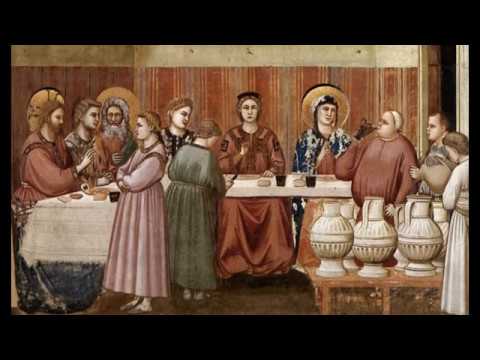
John2: 7 [Latin] – [Jesus saith to them:] Fill the waterpots with water. And they filled them up to the brim.
Original Latin:
Dicit eis Jesus: Implete hydrias aqua. Et impleverunt eas usque ad summum.
Christ makes wine out of water at the marriage at Cana. Etching by G. Volpato, 1772, after G. Robusti, il Tintoretto. Image via Wikimedia Commons, licensed under the Creative CommonsAttribution 4.0 International license.
***
“Implete hydrias aqua,” sacred chant composed in 2018 by Carlotta Ferrari (b. 1975)
Carlotta Ferrari - Implete hydrias aqua (Harvard Choral Fellows)
Sung by the Harvard Choral Fellows. Carson Cooman, organ
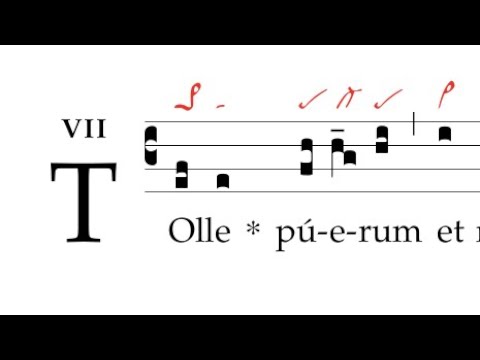
Matthew2: 20; Psalm93: 1-2 [Latin] –[Saying, Arise, and] Take the young child and his mother, and go into the land of Israel: for they are dead which sought the young child’s life.
The Lord reigneth, he is clothed with majesty; the Lord is clothed with strength, wherewith he hath girded himself: the world also is stablished, that it cannot be moved. Thy throne is established of old: thou art from everlasting.
Original Latin:
Tolle puerum et matrem ejus, et vade in terram Israel: defuncti sunt enim qui quaerebant animam pueri.
Dominus regnavit! Decorem indutus est; indutus est Dominus, fortitudine praecinxit se. Etenim firmavit orbem terrae, qui non commovebitur. Firmata sedes tua ex tunc.
“Saint Joseph and the Christ,” – painting by Bartolomé Esteban Murillo (1617–1682)
Psalm110:4 [Latin: Psalmi 109:4] – The Lord hath sworn, and will not repent, Thou art a priest for ever after the order of Melchizedek.
Original Latin:
Juravit Dominus, et non poenitebit eum: Tu es sacerdos in aeternum secundum ordinem Melchisedech.
Latin inscription at Catholic parish church of Sankt Emmeram: Chehrbogen, which says, “Tu es sacerdos in aeternum secundum ordinem Melchisedech” (Image by K. Baas via Wikimedia Commons, licensed under the Creative CommonsAttribution-Share Alike 4.0 International license.
***
“Tu es sacerdos,” for SATB choir and organ, composed by Serban Nichifor (b. 1954)
Psalm25: 1-3a [Latin] –Unto thee, O Lord, do I lift up my soul. O my God, I trust in thee: let me not be ashamed, let not mine enemies triumph over me. Yea, let none that wait on thee be ashamed: let them be ashamed which transgress without cause.
Original Latin:
Ad te, Domine, levavi animam meam; Deus meus, in te confido; non erubescam; Neque irrideant me inimici mei; etenim qui te exspectant non confudentur.
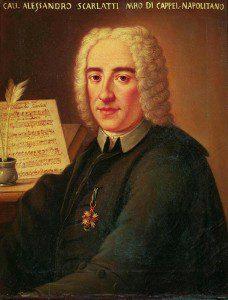
Alessandro Scarlatti (Image via Wikipedia)
***
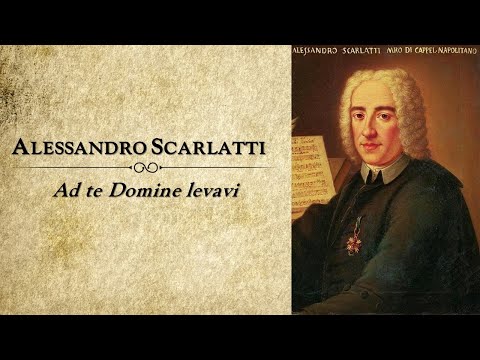
“Ad te Domine levavi animam meam,” a 4-voice, a cappella Offertory for Advent I, composed in 1705 by Alessandro Scarlatti (1660-1725)
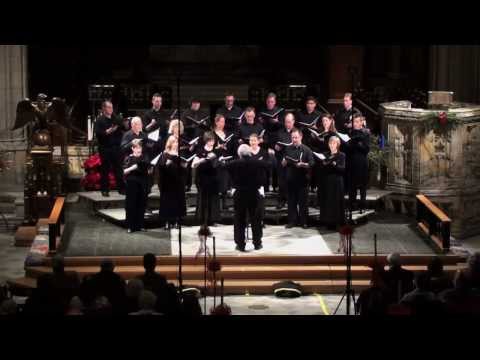
Psalm95:1-2 [Latin] – O come, let us sing unto the Lord: let us make a joyful noise to the rock of our salvation. Let us come before his presence with thanksgiving, and make a joyful noise unto him with psalms.
Original Latin: Venite, exsultemus Domino; jubilemus Deo salutari nostro; praeoccupemus faciem ejus in confessione, et in psalmis jubilemus ei:
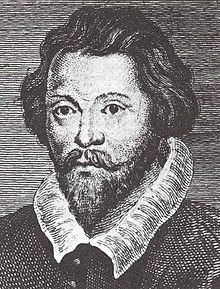
Detail of an 18th-century posthumous engraving of William Byrd by Gerard Vandergucht, after Niccolò Haym.




![Hand Gottes [The hand of God] The hand as an isolated motif. Fresco from Sant Climent de Taüll, Catalonia, Spain.](https://commons.wikimedia.org/wiki/File:Hand_gottes.jpg)