1 The Lord said unto my Lord, Sit thou at my right hand, until I make thine enemies thy footstool.
2 The Lord shall send the rod of thy strength out of Zion: rule thou in the midst of thine enemies.
3 Thy people shall be willing in the day of thy power, in the beauties of holiness from the womb of the morning: thou hast the dew of thy youth.
4 The Lord hath sworn, and will not repent, Thou art a priest for ever after the order of Melchizedek.
5 The Lord at thy right hand shall strike through kings in the day of his wrath.
6 He shall judge among the heathen, he shall fill the places with the dead bodies; he shall wound the heads over many countries.
7 He shall drink of the brook in the way: therefore shall he lift up the head.
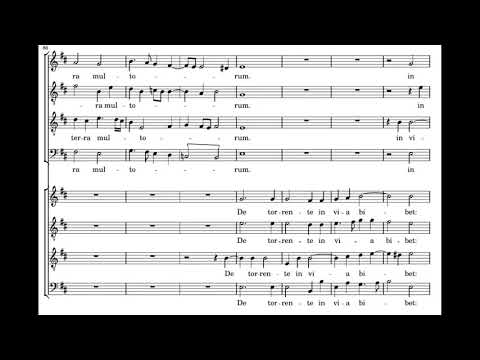
Dixit Dominus Domino meo: sede a dextris meis, donec ponam inimicos tuos scabellum pedum tuorum. Virgam virtutis tuae emittet Dominus ex Sion: dominare in medio inimicorum tuorum. Tecum principium in die virtutis tuae in splendoribus sanctorum: ex utero, ante luciferum, genui te. Juravit Dominus et non poenitebit eum: tu es sacerdos in aeternum secundum ordinem Melchisedech. Dominus a dextris tuis: confregit in die irae suae reges. Judicabit in nationibus, implebit ruinas: conquassabit capita in terra multorum. De torrente in via bibet: propterea exaltabit caput.
[Additional music lyrics: Gloria Patri, et Filio, et Spiritui Sancto: Sicut erat in principio, et nunc, et semper, et in saecula saeulorum. Amen.]
8 And the centurion making answer, said: Lord, I am not worthy that thou shouldst enter under my roof: but only say the word, and my servant [“my soul” in Victoria’s music] shall be healed.
3 Have mercy on me, O Lord, for I am weak: heal me, O Lord, for my bones are troubled.
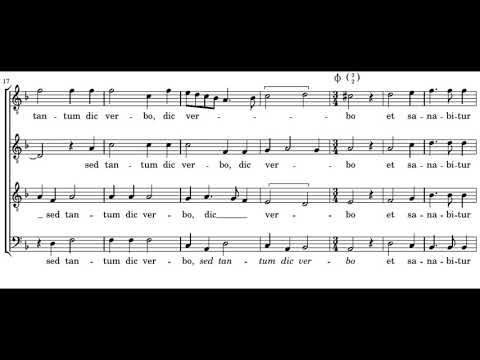
Domine, non sum dignus ut intres sub tectum meum, sed tantum dic verbum, et sanabitur anima mea. Miserere mei, quoniam infirmus sum; sana me, Domine, et sanabor.
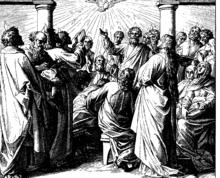
1 And when the day of Pentecost was fully come, they were all with one accord in one place.
2 And suddenly there came a sound from heaven as of a rushing mighty wind, and it filled all the house where they were sitting.
19 Then the same day at evening, being the first day of the week, when the doors were shut where the disciples were assembled for fear of the Jews, came Jesus and stood in the midst, and saith unto them, Peace be unto you.
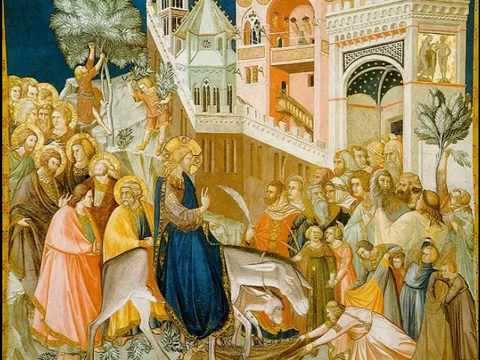
9 And the multitudes that went before, and that followed, cried, saying, Hosanna to the son of David: Blessed is he that cometh in the name of the Lord; Hosanna in the highest.
4 Surely he hath borne our griefs, and carried our sorrows: yet we did esteem him stricken, smitten of God, and afflicted.
5 But he was wounded for our transgressions, he was bruised for our iniquities: the chastisement of our peace was upon him; and with his stripes we are healed.
1 How doth the city sit solitary, that was full of people! how is she become as a widow! she that was great among the nations, and princess among the provinces, how is she become tributary!
2 She weepeth sore in the night, and her tears are on her cheeks: among all her lovers she hath none to comfort her: all her friends have dealt treacherously with her, they are become her enemies.
6 And from the daughter of Zion all her beauty is departed: her princes are become like harts that find no pasture, and they are gone without strength before the pursuer.
10 The adversary hath spread out his hand upon all her pleasant things: for she hath seen that the heathen entered into her sanctuary, whom thou didst command that they should not enter into thy congregation.
11 All her people sigh, they seek bread; they have given their pleasant things for meat to relieve the soul: see, O LORD, and consider; for I am become vile.
8 The LORD hath purposed to destroy the wall of the daughter of Zion: he hath stretched out a line, he hath not withdrawn his hand from destroying: therefore he made the rampart and the wall to lament; they languished together.
12 They say to their mothers, Where is corn and wine? when they swooned as the wounded in the streets of the city, when their soul was poured out into their mothers’ bosom.
13 What thing shall I take to witness for thee? what thing shall I liken to thee, O daughter of Jerusalem? what shall I equal to thee, that I may comfort thee, O virgin daughter of Zion? for thy breach is great like the sea: who can heal thee?
1 I AM the man that hath seen affliction by the rod of his wrath.
2 He hath led me, and brought me into darkness, but not into light.
22 It is of the LORD’s mercies that we are not consumed, because his compassions fail not.
27 It is good for a man that he bear the yoke in his youth.
1 How is the gold become dim! how is the most fine gold changed! the stones of the sanctuary are poured out in the top of every street.
2 The precious sons of Zion, comparable to fine gold, how are they esteemed as earthen pitchers, the work of the hands of the potter!
1 Remember, O LORD, what is come upon us: consider, and behold our reproach.
2 Our inheritance is turned to strangers, our houses to aliens.
3 We are orphans and fatherless, our mothers are as widows.
4 We have drunken our water for money; our wood is sold unto us.
5 Our necks are under persecution: we labour, and have no rest.

,_ca.1511,_Alexander_Turnbull_Library,_MSR-11_(5530631509).jpg)

![Victoria | Dum complerentur dies Pentecostes [á 5; Ensemble Plus Ultra]](https://bibleasmusic.com/wp-content/plugins/wp-youtube-lyte/lyteCache.php?origThumbUrl=https%3A%2F%2Fi.ytimg.com%2Fvi%2FDvo-xTm4Y54%2F0.jpg)